 2026/10/26 – 1st Gitter-Boltzmann-Arbeitskreis at KIT 2026/10/26 – 1st Gitter-Boltzmann-Arbeitskreis at KITFrom 13 to 14 October, the Lattice Boltzmann Research Group (LBRG) at Karlsruher Institut für Technologie (KIT) welcomed researchers from Germany and Switzerland for the 1st Gitter Boltzmann Arbeitskreis (GBA) at KIT. In total, we had 36 participants and 18 talks on various LBM-related topics:
- Method Development
Besides the talks, there was plenty of room for exchange: an open discussion on challenges, opportunities and joint activities, the conference dinner at Il Caminetto, and a closing session where we already looked ahead to the next meeting.
The GBA aims to build a national network for lattice Boltzmann research, teaching and innovation, bringing together method developers and users from research and industry, beginners and experts alike.
A big thank you to all session chairs (Jens Harting, Martin Geier, Stephan Simonis, Adrian Kummerländer, Fedor Bukreev), speakers and participants for making the first edition such a lively and productive meeting! We look forward to seeing you, and hopefully many new faces, at the next GBA in Braunschweig next year.
More info may be found here. |
 2026/10/12 - LBRG @ LB Wind 2026 🇫🇷 2026/10/12 - LBRG @ LB Wind 2026 🇫🇷From 30 September to 1 October, the Lattice Boltzmann Research Group (LBRG) at Karlsruher Institut fur Technologie (KIT) took part in the 2nd International Conference on Lattice Boltzmann for Wind Energy and Atmospheric Flows (LB Wind 2026), hosted by IFP Energies nouvelles in Rueil-Malmaison near Paris.
We contributed two talks on our recent simulations of wind turbines with OpenLB, including compressible flows:
- Compressible Wall-Modeled Large Eddy Simulation of Wind Turbines Using Homogenized Lattice Boltzmann Methods in OpenLB - Fedor Bukreev et al.
- Rotors, Wakes, and Wind Farms: Large-Scale Platform-Transparent Simulations in OpenLB - Adrian Kummerlander
From compressible flows around individual rotors to entire wind farms, these talks show how lattice Boltzmann methods combined with high-performance, platform-transparent computing can enable high-fidelity simulations of complex atmospheric flows at scale.
Many thanks to IFP Energies nouvelles and Uppsala University for organizing such a great event. |
 2026/10/05 - Projectmeeting AGH Krakow 2026/10/05 - Projectmeeting AGH KrakowThe Lattice Boltzmann Research Group (LBRG) at Karlsruher Institut für Technologie (KIT) met with our partners from AGH University of Krakow to discuss recent progress in high-Reynolds-number multiphase flow.
|
 2026/09/21 - Final Call for Abstracts: 1st Gitter-Boltzmann-Arbeitskreis 2026/09/21 - Final Call for Abstracts: 1st Gitter-Boltzmann-ArbeitskreisOnly a few days left! The deadline for abstract submission for the first meeting of the Gitter-Boltzmann-Arbeitskreis is October 4, 2026.
The Lattice Boltzmann Research Group (LBRG) at KIT is hosting the 1. Gitter-Boltzmann-Arbeitskreis, a national network and forum for all lattice Boltzmann topics: research, teaching, innovation and projects.
📅 13–14 October 2026
What to expect:
Who should join? Method developers from all disciplines, users from all fields, people from research and industry, and both beginners and experts.
Whether you want to present your latest results, share practical experience or simply connect with the German LBM community, we'd love to hear from you. Submit your abstract and register here.
Please share this with colleagues who might be interested. We look forward to seeing you in Karlsruhe! |
 2026/09/07 - New Paper on Resolved Ceramic Wall-flow Filter Simulation with LBM and OpenLB 2026/09/07 - New Paper on Resolved Ceramic Wall-flow Filter Simulation with LBM and OpenLBThe Lattice Boltzmann Research Group at KIT is very excited to share our latest paper: “Simulation of Particle Structure Rearrangement and Reaction in Wall-Flow Filters at High Flow Velocities with Lattice Boltzmann Methods". Ceramic wall-flow filters play a central role in the reduction of particulate matter emitted from combustion engines, which are used in passenger and commercial vehicles. During filtration, such a filter's particle load and the corresponding pressure drop continuously increase. Therefore, these filters are regularly regenerated by oxidation, burning off the organic parts of diesel soot and rearranging the inert (ash) part of the soot.
This video visualizes the ash fragment rearrangement process during regeneration of a wallflow filter. The inlet velocity of 60 m/s is chosen to resemble experiments by Ole Desens and Julia Thieringer.
To stabilize the simulation at usable resolutions, a Smagorinsky LBM-LES model is used.
Simulation and visualization by Christoph Gaul.
These results has been published in C. Gaul, O. Desens, P. Ernst, A. Nettekoven, A. Dittler, and M. J. Krause. “Simulation of Particle Structure Rearrangement and Reaction in Wall-Flow Filters at High Flow Velocities with Lattice Boltzmann Methods”. In: Fluids 11.8 (2026). issn: 2311-5521. doi: <10.3390/fluids11080194>. url: https://www.mdpi.com/2311-5521/11/8/194. |
 2026/08/31 – NACA 0012 Airfoil Validation and Shape Optimization using OpenLB 2026/08/31 – NACA 0012 Airfoil Validation and Shape Optimization using OpenLBThe Lattice Boltzmann Research Group (LBRG) at Karlsruher Institut für Technologie (KIT) congratulates Dominik Ebert on the successful completion of his Bachelor's thesis, focusing on the unsteady aerodynamic optimization of airfoils operating at a low Reynolds number (Re = 1000).
By controlling the maximum camber and the angle of attack, the gradient-based optimization setup in OpenLB successfully minimizes the objective function (-CL/CD), finding the optimal geometry and conditions to maximize the lift-to-drag ratio of a NACA 0012 Airfoil.
This thesis built upon previous work by Arsh Kumbhat.
Great work, Dominik, and we wish you the best in your future engineering career! |
 2026/08/17 – External Registration Open for the 3rd Annual OpenLB Hackathon 2026/08/17 – External Registration Open for the 3rd Annual OpenLB HackathonThis year, from October 18–24, OpenLB developers will gather at the Naturfreundehaus Badener Höhe (Forbach) in the Black Forest for our third annual hackathon. An intense and fun-filled week focused on improving and extending the OpenLB framework awaits! Beyond coding, this is a fantastic opportunity to exchange knowledge, network, and enjoy the beautiful natural surroundings.
We have a few open spots available for external participants to join the hackathon. We encourage you to apply if you:
- Have prior experience using OpenLB for your own research or work.
Contact us on Linked-in or send us an email at info@openlb.net with a little bit about your OpenLB experience if you'd like to claim a spot! If you have any questions, feel free to reach out. |
 2026/08/10 - Invitation to the 1st Gitter Boltzmann Arbeitskreis 2026/08/10 - Invitation to the 1st Gitter Boltzmann ArbeitskreisThe Lattice Boltzmann Research Group (LBRG) at Karlsruher Institut für Technologie (KIT) is excited to announce the 1st Meeting of the Gitter Boltzmann Arbeitskreis, a national network and forum for all lattice Boltzmann topics (e.g. research, innovation, projects,…).
The inaugural annual meeting will take place on the 13.-14. October, 2026, at KIT in Karlsruhe. We encourage all LBM-Interested in Germany to participate and we look forward to seeing many of you there.
The Gitter Boltzmann Arbeitskreis consist of annual meetings, round table discussions and dinner (self-paid) to exchange common interest, valuable insights and general knowledge.
General information and sign up may be found here. |
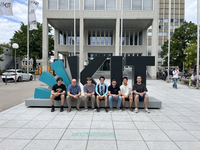 2026/08/03 - LBRG says goodbye to our brazilian colleagues 🇧🇷🇩🇪 2026/08/03 - LBRG says goodbye to our brazilian colleagues 🇧🇷🇩🇪Over the past six months, the LBRG at KIT has had the absolute pleasure of hosting and working alongside Flavia Zinani (Professor at the Federal University of Rio Grande do Sul - UFRGS) and Leonardo da Luz Dorneles (Doctoral Researcher from the Laboratory of Structural Bioinformatics and Computational Biology - SBCB).
During their time with us, they made fantastic contributions to our research:
🌊 Flavia focused on simulating wave-energy converters using OpenLB.
💻 Leonardo developed and evaluated optimization methods for massively parallel architectures and helped improve the CSE of collision kernels in OpenLB.
Both contributed extensively not just to our projects, but to the spirit of our group. We had a wonderful time together and already look forward to crossing paths again soon. Until then, we wish you all the best! Flavia and Leonardo’s visits are supported by the collaborative project between UFRGS and KIT: 'MCTI/CNPq 16/24 - Computational Fluid Dynamics and Machine Learning for Sustainable Engineering.' |
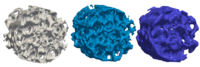 2026/07/27 - New Paper: “Geometry reconstruction from magnetic resonance velocimetry measurements via solving an inverse fluid flow problem” 2026/07/27 - New Paper: “Geometry reconstruction from magnetic resonance velocimetry measurements via solving an inverse fluid flow problem”The Lattice Boltzmann Research Group at KIT is very excited to share our latest paper: “Geometry reconstruction from magnetic resonance velocimetry measurements via solving an inverse fluid flow problem”, as a result of the collaboration between Shota Ito, Alexander Zimmermann, Julius Jeßberger, Stephan Simonis, Adrian Kummerlander, Fedor Bukreev, Jorg Thoming, Georg Pesch und Mathias J. Krause.
The paper provides an alternative to computationally expensive imaging techniques like Computed Tomography (CT) for obtaining the geometry of flow domains. This is achieved by solving an inverse Navier-Stokes problem, where the geometry (specifically the permeability distribution) is iteratively adjusted until the simulated velocity distribution matches the measured experimental data.
Key highlights of the paper:
Innovative geometry reconstruction: it is demonstrated that complex geometries like OCFs can be reconstructed from velocity data with high fidelity (achieving a Jaccard index of 0.91 in simulations)
Performance on real data: when tested with experimental Magnetic Resonance Velocimetry (MRV) data, the method achieved a 12% improvement in the recovered geometry compared to traditional segmentation methods based on MRI signal amplitude images
Noise Reduction: the inverse optimization process acts as a filter, reducing non-physical noise signals inherent in experimental MRV data by restricting the optimized flow field through the underlying conservation equations
The proposed method in the paper offers several advantages for numerical studies, including:
- reducing the reliance on expensive, invasive and time-consuming CT-Scans
The paper is published open access and may be found here. |
 2026/07/13 LBRG at ICCFD 13 in Milan! 2026/07/13 LBRG at ICCFD 13 in Milan!Our team members Shota Ito, Johannes Grafen, and Stephan Simonis from the Lattice Boltzmann Research Group (LBRG) Boltzmann Research Group (Karlsruher Institut für Technologie (KIT)) attended the 13th ICCFD: International Conference on Computational Fluid Dynamics (ICCFD13) in Milan, together with our research partner Arsh Kumbhat from the CAMLab at ETH Zurich!
Overall, we contributed three talks:
- Generation of efficient adjoint lattice Boltzmann collision kernels with reverse mode algorithmic differentiation by Shota Ito
A huge thank you to the local organizing committee, Alberto Guardone and Barbara Re, for hosting such a fantastic event at Politecnico di Milano! |
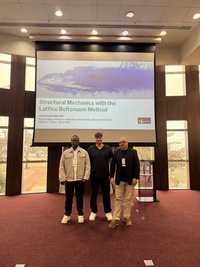 2026/07/07 - DSFD 2026 conference 2026/07/07 - DSFD 2026 conferenceThe Lattice Boltzmann Research Group (LBRG) was thrilled to be part of the DSFD 2026 conference!
Florian Kaiser and Mathias Krause had the wonderful opportunity to showcase some of our most recent breakthroughs and advancements. We were proud to present our work focusing on:
- Tutorial on LBM for Applications by Mathias Krause
Beyond the academic sessions, a massive highlight for our group was the community engagement. It was a pleasure meeting bright new colleagues, sparking fresh ideas, and discussing the future of the field.
We were also incredibly happy to catch up in person with our fantastic project partners from M2P2 at the Aix-Marseille Université (AMU) working on the Falcon project. Collaborations like this drive our research forward, and it's always rewarding to celebrate our shared milestones face-to-face.
A huge thank you to Luis Hegele, Alexander Wagner, Jens Harting and the whole team for organizing DSFD 2026 and to everyone who stopped by our presentations or connected with us. We're heading back to the lab with plenty of inspiration! |
 2026/06/29 - New Paper “N-Component Free Energy Lattice Boltzmann Method with Reduction Consistency and Global Momentum Conservation” 2026/06/29 - New Paper “N-Component Free Energy Lattice Boltzmann Method with Reduction Consistency and Global Momentum Conservation”The Lattice Boltzmann Research Group (LBRG) at Karlsruher Institut für Technologie (KIT) is proud to share our latest paper: “N-Component Free Energy Lattice Boltzmann Method with Reduction Consistency and Global Momentum Conservation”.
This work is the result of a collaboration by Michael Rennick, Xitong Zhang, Tim Niklas Bingert, Matthias J. Krause and Halim Kusumaatmaja.
This paper introduces a novel N-component free Energy Lattice Boltzmann Method, which adresses the long-standing issue of non-physical artifacts due to scale-up (N>=4) : absent fluid phases can spontaneously nucleate out of nowhere and numerical discretisation of errors in surface tension forces create artificial whole-domain momentum shifts. Our method manages to scale reliably to an arbitrary number of fluid phases by implementing an independent flux correction and a divergence-consistent force discretization.
Key Highlights from the Paper:
Reduction Consistency: Our framework ensures that absent fluid components do not unphysically appear, utilizing a flux correction in the Cahn-Hilliard equations that operates entirely independently of fluid mobility.
Machine Precision Conservation: By modifying the surface tension force implementation to align with a numerical divergence-consistent form, we eliminate unphysical whole-domain velocity drifts down to machine precision.
Arbitrary Fluid Phases: The model allows for the simulation of an arbitrary number of immiscible components (N>=4) in principle, with completely independent selection of all interfacial tensions.
Broad Impact: This robust framework unlocks high-fidelity engineering simulations for complex real-world applications, from targeted drug delivery in nested microfluidic emulsions to liquid-liquid phase separations in cell biology and smart anti-fouling coatings.
This paper is published open access and can be found here.
The picture shows the formation of an emulsion droplet from the injected fluids over time. The surface tensions are configured to encourage cloaking of fluids 3 (yellow) and 4 (blue) by fluid 2 (pink).
|
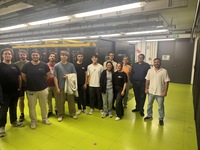 2026/06/22 - CFDS Lab organized by LBRG visits HoreKa supercomputer at SCC/KIT 2026/06/22 - CFDS Lab organized by LBRG visits HoreKa supercomputer at SCC/KITAs part of this year's Computational Fluid Dynamics and Simulation (CFDS) Lab Course, the LBRG organized an excursion to the HoreKa supercomputer at SCC, KIT, featuring an engaging tour graciously guided by René Caspart.
Taking place shortly after the launch of the project phase, this excursion provided 10 students from Mathematics, Engineering, and Computer Science programs with vital firsthand insight into the high-performance computing environment where their simulations of a fluid dynamics cases, all inspired by real-world industry problems, will be running.
The CFDS Lab is offered by a funded collaboration between the Lattice Boltzmann Research Group and the Scientific Computing Center: Fedor Bukreev, Stephan Simonis, Mathias J. Krause, Gudrun Thaeter, Jasmin Hörter, and Martin Frank.
This course is funded by the Federal Ministry of Education and Research (BMBF) and the Baden-Württemberg Ministry of Science as part of the Excellence Strategy of the German Federal and State Governments. More information is available at https://www.lbrg.kit.edu/cfdslab.php
We gratefully acknowledge the computing time for our course provided on the high-performance computer HoreKa by the National High-Performance Computing Center at KIT (NHR-Verein, NHR-Alliance Karlsruhe Institute of Technology (KIT)). This center is jointly supported by the Federal Ministry of Education and Research and the Ministry of Science, Research and the Arts of Baden-Württemberg, as part of the National High-Performance Computing joint funding program. HoreKa is partly funded by the German Research Foundation. |
 2026/06/17 - New Paper: "Lattice Boltzmann Methods for Compressible (Magneto)hydrodynamics" 2026/06/17 - New Paper: "Lattice Boltzmann Methods for Compressible (Magneto)hydrodynamics"The LBRG at KIT is continuing to expand what is possible with LBM in OpenLB and reached a new milestone with compressible magnetohydrodynamics. Key Highlights & Performance • Efficiency: Implemented within the open-source framework OpenLB, our code achieves up to 98.9% of the GPU hardware roofline performance. • Versatility: Discretizes both ideal compressible and resistive incompressible MHD systems (encompassing Euler and Navier-Stokes limits). • Validation: Benchmarked against established compressible and incompressible MHD cases.
To demonstrate our framework's support for dynamic solid geometries, shifting magnetic fields, and fluid-structure interaction, we simulated a moving, surface-resolved magnetized asteroid modeled after 16 Psyche in supersonic early solar wind flow. Methodology, Implementation and Visualization: Fedor Bukreev, Adrian Kummerländer, Mathias J. Krause. YouTube: https://www.youtube.com/watch?v=itsxjEagKmQ |
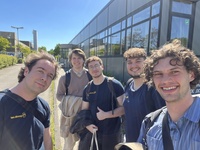 2026/06/15 - LBRG at HLRS for C++ Training 2026/06/15 - LBRG at HLRS for C++ TrainingAfter completing the intermediate C++ course in March, five members of the LBRG at KIT came back to the the HLRS in Stuttgart in May to also participate in the advanced C++ course taught by Klaus Igelberger.
Beyond a deep dive into API design, advanced template programming and software design patterns, it was a fantastic week of networking with fellow researchers from various fields.
We had a great time learning more about advanced topics in C++, which we are now excited to apply in our daily work.
Many thanks again to Klaus Igelberger and HLRS for the great course, a great week of learning and even better conversations!
|
 2026/06/08 - 10th Spring School on Lattice Boltzmann Methods with OpenLB Software Lab in Erlangen (Germany) 2026/06/08 - 10th Spring School on Lattice Boltzmann Methods with OpenLB Software Lab in Erlangen (Germany)Registration is now open for the 10th Spring School 2027 on Lattice Boltzmann Methods with OpenLB Software Lab that will be held in Erlangen/Germany between 05.04.2027 - 09.04.2027.
Early Bird registration ends by the 14th of March 2027.
Our spring school brings together researchers and industry professionals to explore the Lattice Boltzmann Method (LBM), from fundamental theory to real-world applications.
Beginning of the week: Learn the theoretical foundations of LBM, including insights into current research and advanced topics.
For experienced participants, the advanced option of the Spring School provides the opportunity to work on your own application challenges or develop custom LBM implementations, supported by expert tutors. Thursday and Friday are hereby dedicated to independent work, encouraged by continuous feedback and in-depth discussions.
What makes this Spring School special?
We look forward to welcoming you to an inspiring week of learning, collaboration and exchange! |
 2026/06/01 - New Paper “An Integrated Open-Source Software System for the Generation and Analysis of Subject-Specific Blood Flow Simulation Ensembles” 2026/06/01 - New Paper “An Integrated Open-Source Software System for the Generation and Analysis of Subject-Specific Blood Flow Simulation Ensembles”The Lattice Boltzmann Research Group (LBRG) at Karlsruher Institut für Technologie (KIT) is excited to share our latest paper: “An Integrated Open-Source Software System for the Generation and Analysis of Subject-Specific Blood Flow Simulation Ensembles.” |
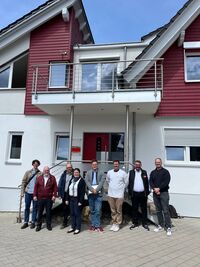 2026/05/26 - LBRG at INFRA Project Kick-off Meeting 2026/05/26 - LBRG at INFRA Project Kick-off MeetingLast week, the Lattice Boltzmann Research Group (LBRG) at Karlsruher Institut für Technologie (KIT) met with project partners Willi Mayer Holzbau GmbH, UBP-Consulting GmbH, and CeMOS - Research and Transfer Center of Technische Hochschule Mannheim at Willi Mayer Holzbau in Bisingen. The meeting marked the kick-off for the InvestBW-funded project INFRA (Innovative nachhaltige Wärmeeffizienz-Analyse im realen Altbau / Innovative sustainable thermal efficiency analysis in real-world existing buildings).
|
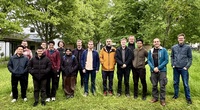 2026/05/18 – Training on Algorithmic Differentiation at KIT 2026/05/18 – Training on Algorithmic Differentiation at KITThat’s a wrap on an intensive training on Algorithmic Differentiation (AD)! Last week, Shota Ito, Johannes Grafen and Leonardo Dorneles participated in the AD training at the Karlsruher Institut fur Technologie (KIT). It was a great opportunity to dive into the theory and practical application of AD during the lectures and hands-on coding sessions. The two-day training on AD covered everything from the foundational theory to scalable AD tools for high-performance computing:
|
_page-0001_rdax_200x283s.jpg) 2026/05/11 - KLIPER 2026 Award: OpenLB receives recognition for support 2026/05/11 - KLIPER 2026 Award: OpenLB receives recognition for supportBig news from the KLIPER 2026 competition!
The LBRG at KIT is honored to be recognized for supporting engineering talent. This award aimes to promote original diploma theses centering around current challenges in the field of energy engineering, for example showcasing modern solutions into fields such as conventional and renewable energy, energy machinery and equipment, as well as CFD, 3D-Design and energy efficient construction.
We congratulate Maksymilian Zarychta for his work titled “Analysis of the Effect of Water Nozzle Geometry on Liquid Jet Characteristics Using LBM Modeling” („Analiza wpływu geometrii dyszy wodnej na charakter strugi cieczy z wykorzystaniem modelowania LBM”). Using the power of OpenLB, Maksymilian explored critical nozzle geometries, bridging the gap between theoretical CFD and practical energy solutions.
Thank you, for your amazing work Maksymilian!
The video may be found here.
|
_rdax_200x134.jpeg) 2026/05/04 – New research staff member: Andreas Nettekoven joins the LBRG at KIT 2026/05/04 – New research staff member: Andreas Nettekoven joins the LBRG at KITWe are excited to share that Andreas Nettekoven has joined our team as a new doctoral researcher back in March. His research focuses on 3D fluid-structure interaction, as well as simulation of particle flows with LBM.
He started his academic career right here at KIT, where he completed his Bachelor's and Master's degree in Mechanical Engineering, with a specialization in continuum mechanics and simulations.
Welcome to the team, Andreas! |
 2026/04/27- New Paper "Efficient fluid structure interaction simulation of vocal fold oscillations using a homogenized Lattice Boltzmann Method" 2026/04/27- New Paper "Efficient fluid structure interaction simulation of vocal fold oscillations using a homogenized Lattice Boltzmann Method"We are excited to announce the publication of "𝗘𝗳𝗳𝗶𝗰𝗶𝗲𝗻𝘁 𝗳𝗹𝘂𝗶𝗱 𝘀𝘁𝗿𝘂𝗰𝘁𝘂𝗿𝗲 𝗶𝗻𝘁𝗲𝗿𝗮𝗰𝘁𝗶𝗼𝗻 𝘀𝗶𝗺𝘂𝗹𝗮𝘁𝗶𝗼𝗻 𝗼𝗳 𝘃𝗼𝗰𝗮𝗹 𝗳𝗼𝗹𝗱 𝗼𝘀𝗰𝗶𝗹𝗹𝗮𝘁𝗶𝗼𝗻𝘀 𝘂𝘀𝗶𝗻𝗴 𝗮 𝗵𝗼𝗺𝗼𝗴𝗲𝗻𝗶𝘇𝗲𝗱 𝗟𝗮𝘁𝘁𝗶𝗰𝗲 𝗕𝗼𝗹𝘁𝘇𝗺𝗮𝗻𝗻 𝗠𝗲𝘁𝗵𝗼𝗱" by Adrian Kummerländer*, Bogac Tur*, Maik Haase, Fedor Bukreev, Michael Döllinger, Mathias J. Krause, and Stefan Kniesburges (* joint first authors) in 𝗖𝗼𝗺𝗽𝘂𝘁𝗲𝗿 𝗠𝗲𝘁𝗵𝗼𝗱𝘀 𝗶𝗻 𝗔𝗽𝗽𝗹𝗶𝗲𝗱 𝗠𝗲𝗰𝗵𝗮𝗻𝗶𝗰𝘀 𝗮𝗻𝗱 𝗘𝗻𝗴𝗶𝗻𝗲𝗲𝗿𝗶𝗻𝗴.
The paper addresses the unique challenges of 𝗺𝗼𝗱𝗲𝗹𝗶𝗻𝗴 𝗵𝘂𝗺𝗮𝗻 𝗽𝗵𝗼𝗻𝗮𝘁𝗶𝗼𝗻, which are typically constrained by high computational costs and numerical difficulties handling vocal fold (VF) contact. It is motivated by the need for systematic studies of phonation across different ages and genders that were previously infeasible with traditional approaches.
The main findings include: - Novel FSI Solver: A coupling strategy that integrates a homogenized Lattice Boltzmann Method (HLBM) with a Six-Mass-Model (6MM) by mapping structural dynamics into a time-dependent porosity field.
- Dynamic Porosity: This approach implicitly handles complex geometry changes and VF contact, bypassing the need for expensive remeshing or complex interface tracking.
- High Efficiency: The solver achieved a throughput of up to 60 oscillation cycles per hour on a single laptop GPU (NVIDIA RTX 2000 Ada).
- Physiological Fidelity: Simulations produced stable, self-sustained oscillations at a fundamental frequency (f0) of ≈248 Hz, achieving complete glottal closure and credible peak contact forces (≈27 mN).
This optimized workflow shifts the focus from isolated case studies to large-scale parameter sweeps, opening new doors for clinical and voice-science applications.
The article is published 𝗼𝗽𝗲𝗻 𝗮𝗰𝗰𝗲𝘀𝘀 in the journal Computer Methods in Applied Mechanics and Engineering and is freely available at https://doi.org/10.1016/j.cma.2026.119009 .
Video link: https://www.youtube.com/watch?v=hqCxjtOzZVs . |
 2026/04/20 - Computational Fluid Dynamics Lab (CFDS Lab) 2026/04/20 - Computational Fluid Dynamics Lab (CFDS Lab)Are you interested in Computational Fluid Dynamics and High-Performance Computing? Come join our 𝗖𝗼𝗺𝗽𝘂𝘁𝗮𝘁𝗶𝗼𝗻𝗮𝗹 𝗙𝗹𝘂𝗶𝗱 𝗗𝘆𝗻𝗮𝗺𝗶𝗰𝘀 𝗮𝗻𝗱 𝗦𝗶𝗺𝘂𝗹𝗮𝘁𝗶𝗼𝗻 𝗟𝗮𝗯 during this 𝘀𝘂𝗺𝗺𝗲𝗿 𝘀𝗲𝗺𝗲𝘀𝘁𝗲𝗿 𝟮𝟬𝟮𝟲! If you want to learn the concepts of mathemtical modeling of PDEs, numerical simulation using Lattice Boltzmann Methods and high performance computing this course is for you.
What’s the focus?
We dive into the Lattice Boltzmann Methods (LBM) and talk about how to solve real-world transport phenomena in fluids and solids. You’ll work on diverse applications like, Chemical Reactors, Centrifugal Pumps, Aerodynamics/Airfoils and many more.
The Toolkit
Participants will get hands-on experience with the C++ software library OpenLB, and learn how to run simulations on High-Performance Computing (HPC) clusters.
How it works
This lab is funded by the Federal Ministry of Education and Research (BMBF) and the Baden-Württemberg Ministry of Science as part of the Excellence Strategy of the German Federal and State Governments. More information can be found here: https://www.lbrg.kit.edu/cfdslab.php |
 2026/04/13 - New paper "In vivo blood viscosity estimation from microscopic images by solving an inverse incompressible Navier-Stokes problem" 2026/04/13 - New paper "In vivo blood viscosity estimation from microscopic images by solving an inverse incompressible Navier-Stokes problem"We are excited to announce the publication on in vivo blood estimation by Shota Ito, Moritz Vogel, Adrian A. Fessler, Adrian Kummerländer, Anna Lischke, Dietmar Gradl, Ferdinand le Noble, Mathias J. Krause and Stephan Simonis. The concept of this paper is based on the developement of non-invasive framework (combining microvascular particle image velocimetry (micro-PIV) with computational fluid dynamics (CFD) to estimate the effective blood viscosity in vivo) and the usage of time-averaged velocity fields, which are reconstructed from high-speed microscopic image sequences of blood flow and are incorporated into an inverse formulation of the incompressible Navier-Stokes equations for an either Newtonian or non-Newtonian fluid and solved using full CFD simulations. The paper is published open access in the journal Computer Methods in Applied Mechanics and Engineering and is freely available at https://doi.org/10.1016/j.cma.2026.118927 . |
 2026/04/07 - New paper "Analytical solution for dynamic evaporation of liquid in isothermal condition" 2026/04/07 - New paper "Analytical solution for dynamic evaporation of liquid in isothermal condition"We are excited to announce the publication of our latest research on liquid-vapor phase transitions by Luiz Eduardo Czelusniak, Tim Niklas Bingert, Stephan Simonis, Alexander Wagner and Mathias J. Krause. This study is motivated by the need for deeper physical insights into evaporation phenomena, which are critical for engineering applications ranging from food drying to fuel injection systems in combustion engines. |
 2026/04/03 - New paper "Pore-scale applications of Phase-field Lattice Boltzmann Methods for underground CH4, H2 and CO2 storage" 2026/04/03 - New paper "Pore-scale applications of Phase-field Lattice Boltzmann Methods for underground CH4, H2 and CO2 storage"We are excited to share our latest publication : “Pore-scale applications of Phase-field Lattice Boltzmann Methods for underground CH₄, H₂ and CO₂ storage” by Alice Raeli, Mathias J. Krause, Dario Viberti, Tim Niklas Bingert, Eloisa Salina Borello, Cristina Serazio, and Luiz Eduardo Czelusniak.
This work explores advanced pore-scale modeling approaches, leveraging OpenLB, to better understand multiphase flow dynamics in Underground Gas Storage (UGS) systems.
In this study, we present:
These developments contribute to more reliable and efficient modeling of subsurface storage processes for CH₄, H₂ and CO₂.
The paper is published open access in the Journal of Energy Storage and is freely available on https://doi.org/10.1016/j.est.2026.121868 . |
_rdax_200x150s.jpg) 2026/03/30- LBRG at HLRS for C++ Training 2026/03/30- LBRG at HLRS for C++ TrainingEarlier this month, four members of our group spent an intensive week in March at the HLRS - Höchstleistungsrechenzentrum Stuttgart in Stuttgart participating in the intermediate C++ Course taught by Klaus Iglberger. |
 2026/03/27 - The Spring School 2026 in Liverpool (UK) was a success 2026/03/27 - The Spring School 2026 in Liverpool (UK) was a successWhat a great week at the University of Liverpool! Bringing together the LBM-community, with 42 participants from 11 countries for our 9th Spring School on Lattice Boltzmann Methods. We would like to thank our friends at University of Liverpool, John Bridgeman, Davide Dapelo and Mohaddeseh Mousavi Nezhad for hosting this year's Spring School, which allowed us to introduce and help so many people to the methods, theory and best practices of LBM. The spring school provides both an environment for learning and understanding LBM, but also for developing new and interesting research problems. Also a big thank you to Shota Ito, Tikhon Riazantsev, Mathias J. Krause and Stephan Simonis for organizing this year's OpenLB spring school.
|
 2026/03/23 - Visit of Prof.Dr. Siddhartha Mishra for the KIT Workshop: Data-driven methods for PDEs 2026/03/23 - Visit of Prof.Dr. Siddhartha Mishra for the KIT Workshop: Data-driven methods for PDEsLast week, the LBRG team participated in the Workshop on Data-driven methods for PDEs at the Karlsruher Institut für Technologie (KIT) Department of Mathematics. |
_rdax_200x150s.jpg) 2026/03/16 - LBRG Student presentations 2026/03/16 - LBRG Student presentationsOur weekly LBRG Seminar provides a stage for our HiWis and thesis students to showcase their work. We recently enjoyed a fantastic round of presentations from our student members:
|
 2026/03/09 - Visiting Scientists at LBRG 2026/03/09 - Visiting Scientists at LBRGWe are excited to welcome a group of visiting scientists to the LBRG! International exchange and collaboration are at the core of our research, and we are delighted to be hosting three researchers currently working with our team.
|
 2026/02/23 – New research staff member: Johannes Grafen joins the LBRG 2026/02/23 – New research staff member: Johannes Grafen joins the LBRGWe are excited to share that Johannes Grafen has joined our team as a new doctoral researcher back in November. His research focuses on Gradient-based Optimization (GBO) with LBM and Uncertainty Quantification (UQ). |
_rdax_200x150.jpeg) 2026/02/16 — Project Visit: myEnspect (investBW) 2026/02/16 — Project Visit: myEnspect (investBW)We were delighted to host Johannes Klatte and Matthias Wagner from IDR-Solutions GmbH for our collaborative project, myEnspect. |
 2026/02/09 – New project: The "Beyond 15-minute Cities" 2026/02/09 – New project: The "Beyond 15-minute Cities"As climate change intensifies, the "15-minute city" concept, reliant on walking and cycling, is being challenged by extreme heat that can render outdoor mobility hazardous. |
 2026/02/02 - Lattice Boltzmann Simulation of Lauric Acid Melting in Rectangular Cavity With Different Fin Configurations With OpenLB 2026/02/02 - Lattice Boltzmann Simulation of Lauric Acid Melting in Rectangular Cavity With Different Fin Configurations With OpenLBWe are pleased to share this recent study about Latent heat energy storage systems (LHESS) using phase change materials (PCMs), which offer high thermal energy storage density and effective temperature regulation due to their ability to absorb and release heat at nearly constant temperatures. However, accurately simulating the melting process of PCMs remains challenging due to the nonlinear nature of heat transfer and phase transition mechanisms. In this study, the Lattice Boltzmann Method (LBM), implemented via the OpenLB framework, is employed to simulate the melting behavior of lauric acid material inside a finned rectangular cavity. The primary objective is to validate a new OpenLB numerical model against benchmark experimental data. The simulation results show excellent agreement with experimental observations in terms of liquid fraction evolution over time, particularly for the case with higher spatial and temporal resolution. Additionally, temperature measurements obtained from thermocouples at multiple locations within the cavity display the same trend in temperature evolution as observed in the numerical model, further supporting the model's reproducibility. Following validation, the model is used to study 12 additional configurations involving variations in fin aspect ratio and position. The simulations reveal that longer, thinner fins placed near the bottom of the cavity can reduce the total melting time. Between the minimum and maximum melting times obtained in this study, the fin aspect ratio and position showed a difference of 63.7%. Compared to upper fin placements, lower-position fins consistently maintained increased melting rates, with improvements ranging from 11% to 26% depending on the fin aspect ratio. In fact, higher melting rates were observed in longer and thinner fins for all positions studied, with improvements ranging from 1% to 25% depending on the position. Youtube Video: https://www.youtube.com/watch?v=IiPDLxNIRPs Read the full paper here: https://lnkd.in/dgsk5XSf |
 2026/01/19 – Guest visit of Dr. Eng. Luiz Hegele Jr. 2026/01/19 – Guest visit of Dr. Eng. Luiz Hegele Jr.
He presented an insightful talk titled “Moment Representation in the LBM: Boundary Conditions and Complex Flows”, offering valuable insights into his group’s ongoing research. With our teams working on closely related topics, the visit sparked productive discussions and a fruitful exchange of ideas. We look forward to reconnecting later this year at the International Conference on Discrete Simulation of Fluid Dynamics (DSFD) in Balneário Camboriú, Brazil, which he will co-host. Thank you for visiting, Luiz - it was a pleasure having you! |
 2026/01/12 – New research staff member: Tikhon Riazantsev joins the LBRG 2026/01/12 – New research staff member: Tikhon Riazantsev joins the LBRGWe are pleased to announce that Tikhon Riazantsev has joined our team as a new doctoral student back in October. His research concerns multiphase flow simulations using the lattice Boltzmann method, focusing on thermodynamically consistent phase-change modelling. Before starting his doctoral research at the Lattice Boltzmann Research Group at KIT, he completed his Master's degree in Biomedical Engineering at the Universität zu Lübeck and his Bachelor's degree in Mechanical Engineering with a specialization in Hydraulics at the Bauman Moscow State Technical University. Welcome to our team, Tikhon! |
 2026/01/05 - LBRG at the 15th conference of the European Aerospace Science Network (EASN) 2026/01/05 - LBRG at the 15th conference of the European Aerospace Science Network (EASN)
Alongside other partners of the EU Horizon project FALCON (https://falconproject.eu/), they presented talks on efficient wall-modeled large eddy simulations for fluid-structure interaction as well as the automatic code generation of adjoint lattice Boltzmann methods for these simulations. |
 2025/12/29 - Throwback to the Annual OpenLB Hackathon 2025/12/29 - Throwback to the Annual OpenLB HackathonFor the second time, more than twenty OpenLB developers retreated to the mountains for their annual Hackathon. There, they spent one week fully focused on improving the framework, exchanging knowledge and enjoying nature. This time, the focus was on refactoring all 138 example cases into a new consistent and user-friendly case style as well as general maintenance for the release of OpenLB 1.9 . |
 2025/11/17 - CFDS Lab organized by LBRG visits HoreKa supercomputer at SCC/KIT 2025/11/17 - CFDS Lab organized by LBRG visits HoreKa supercomputer at SCC/KITAs part of this year's Computational Fluid Dynamics and Simulation (CFDS) Lab Course, the LBRG organized an excursion to the HoreKa supercomputer at SCC, KIT.
The CFDS Lab is offered by a funded collaboration between the Lattice Boltzmann Research Group and the Scientific Computing Center (https://www.scc.kit.edu/): Stephan Simonis, Mathias J. Krause, Gudrun Thaeter, Jasmin Hörter, and Martin Frank.
This course is funded by the Federal Ministry of Education and Research (BMBF) and the Baden-Württemberg Ministry of Science as part of the Excellence Strategy of the German Federal and State Governments. More information on is available here
We gratefully acknowledge the computing time for our course provided on the high-performance computer HoreKa by the National High-Performance Computing Center at KIT (NHR-Verein, NHR-Alliance Karlsruhe Institute of Technology (KIT)). This center is jointly supported by the Federal Ministry of Education and Research and the Ministry of Science, Research and the Arts of Baden-Württemberg, as part of the National High-Performance Computing joint funding program.HoreKa is partly funded by the German Research Foundation. |
 2025/11/10 - With SeaDream in Liverpool 2025/11/10 - With SeaDream in LiverpoolOver the past four weeks, four members of LBRG visited the University of Liverpool as part of the European Project SeaDream.
- Mathias J. Krause gave several presentations to colleagues in Liverpool, Manchester, Cardiff, and Sheffield
|
 2025/11/03 - LBRG and Prof. Dr. Marcio Dorn visited Dr. Pedro Narloch at paretos in Heidelberg 2025/11/03 - LBRG and Prof. Dr. Marcio Dorn visited Dr. Pedro Narloch at paretos in HeidelbergWe’re proud to share that Dr. Pedro Henrique Narloch, a recent alumnus of UFRGS under the supervision of Prof. Dr. Marcio Dorn and a frequent visitor LBRG, has joined paretos as a Machine Learning Engineer.
In August, Marcio Dorn and Mathias J. Krause Krause visited Pedro Henrique Narloch at paretos and discussed further opportunities for continuing joint interdisciplinary projects such as the successfully completed DAAD-funded ProBral initiative on Mesoscopic Molecular Dynamics Simulations.
We wish you all the best in your new role, Pedro Henrique Narloch! |
 2025/10/27 - Guest visit of Prof. Dr. Marcio Dorn at LBRG 2025/10/27 - Guest visit of Prof. Dr. Marcio Dorn at LBRGIn August, we had the pleasure of welcoming Prof. Dr. Marcio Dorn (SBCB Lab at UFRGS, Brazill, https://sbcb.inf.ufrgs.br/) at LBRG. The longstanding Brazil-German collaboration between Mario Dorn and Mathias J. Krause Krause at LBRG has resulted in numerous staff exchanges at all academic career levels as well as workshops, publications and successful projects on Lattice Boltzmann Methods, Machine Learning, High-Performance Computing and cross-disciplinary fields of application. We look forward to continuing the fruitful collaboration with Marcio Dorn and the SBCB Lab at UFRGS. |
 2025/10/20 - LBRG at Cardiff University 2025/10/20 - LBRG at Cardiff UniversityIn September, Mathias had the pleasure to visit his alma mater Cardiff University / Prifysgol Caerdydd, where he was studying as an Erasmus scholar more than 20 years ago. He renewed and intensified his contacts to Emeritus Professor of Mathematics Tim Phillips and Reader in the School of Engineering Zhihua Xie. Besides research around Lattice Boltzmann Methods (LBM) and its applications, the organization of future collaborations were discussed as well as a revival of undergraduate student exchange programs.
Thank you, Cardiff — it was good to be back! |
 2025/10/13 - CFDS Lab organized by LBRG visits wind tunnel at IWU KIT 2025/10/13 - CFDS Lab organized by LBRG visits wind tunnel at IWU KITAs part of this year's Computational Fluid Dynamics and Simulation (CFDS) Lab Course, the LBRG organized an excursion to the wind tunnel at the Laboratory of Building and Environmental Aerodynamics at IWU, KIT.
The CFDS Lab is offered by a funded collaboration between the Lattice Boltzmann Research Group and the Scientific Computing Center (https://www.scc.kit.edu/): Stephan Simonis, Mathias J. Krause, Gudrun Thaeter, Jasmin Hörter and Martin Frank.
In the course, we enable students to efficiently use the large-scale computing infrastructures at KIT such as HoreKa for scientific simulations with highly efficient codes such as OpenLB.
This course is funded by the Federal Ministry of Education and Research (BMBF) and the Baden-Württemberg Ministry of Science as part of the Excellence Strategy of the German Federal and State Governments. Learn more |
 2025/10/06 - Final HighVis Projcet Meeting at LBRG 2025/10/06 - Final HighVis Projcet Meeting at LBRGIn August, the LBRG had the pleasure of welcoming Prof. Dr. Ferdinand le Noble and Dr. Dietmar Gradl from the Zoological Institute at KIT for the final HighVis project meeting.
In this project we propose a novel approach to measure blood viscosity based on in vivo intravital microscopic imaging of dynamic blood flows in the microcirculation, and subsequent computational analysis of microcirculatory red blood cell behavior.
A big thank you to the project group, Shota Ito, Ferdinand le Noble, Dietmar Gradl, Mathias J. Krause, and Stephan Simonis and our collaboration partners Gerd Klose, Ali Fard, Christian Kungel, and Sophia Schmitt, for their contributions and insights throughout this exciting project!
Stay tuned for upcoming publications and follow-up initiatives building on this work.
|
 2025/09/29 - Meeting for the new VDMA project 2025/09/29 - Meeting for the new VDMA projectOn August 28th, LBRG visited ITT Rheinhutte Pumpen GmbH (www.rheinhuette.de) preparing the official start of a new VDMA project, in which LBRG and HS Offenburg will jointly develop LBM-based simulation tools for high-fidelity centrifugal pump calculations.
We were pleased to meet our project partners: Prof. Andreas Schneider from HS Offenburg, Dr.-Ing. Heiko Kipp from ITT Rheinhütte Pumpen GmbH, and Harald Frank from VDMA. As part of the meeting, we had the opportunity to tour ITT Rheinhütte Pumpen GmbH’s production facilities and discuss the initial steps of the project.
We look forward to this collaboration and to developing a state-of-the-art design instrument for next-generation pump technologies together with our partners. |
 2025/09/22 - New paper on Optimization of single node load balancing 2025/09/22 - New paper on Optimization of single node load balancingAdrian Kummerländer, Fedor Bukreev, Dennis Teutscher, Marcio Dorn and Mathias J. Krause have published a new paper on the Optimization of single node load balancing for lattice Boltzmann method on heterogeneous high performance computers in the Journal of Parallel and Distributed Computing (JPDC).
While LBMs are particularly suited for highly parallel computational fluid dynamics simulations on heterogeneous HPC systems, the computationally dominant collide-and-stream loops commonly utilize only GPUs, leaving CPU resources underutilized. To overcome this limitation, this article proposes a novel load balancing strategy based on a genetic algorithm for bottom-up, cost-aware optimization of spatial domain decompositions. This approach generates subdomains and rank assignments inherently suited for cooperative execution on both CPUs and GPUs. Implemented in the open source framework OpenLB, the strategy is applied to turbulent flow reference cases, including a multi-physics reactive mixer. A detailed evaluation on heterogeneous HPC nodes demonstrates significant performance gains, achieving speedups of up to 87% compared to traditional GPU-only execution. This work therefore establishes cost-aware, bottom-up decomposition as a suitable strategy for exploiting the native heterogeneity of modern compute nodes. |
 2025/09/15 - New Team Member 2025/09/15 - New Team MemberWe are delighted to welcome our new PhD student, Florian Kaiser, to the group. His research will focus on solving transport problems in process engineering using monolithic approaches, with a particular emphasis on the development and implementation of a monolithic FSI solver. |
 2025/08/25 - New Paper published on the consistency of pseudo-potential lattice Boltzmann methods 2025/08/25 - New Paper published on the consistency of pseudo-potential lattice Boltzmann methodsWe present a rigorous analysis of the pseudo-potential lattice Boltzmann method (P-LBM), showing its convergence to a PDE under diffusive scaling. By linking model parameters directly to physical properties, we enable simulations with inputs in SI units—no empirical tuning required. The method is implemented in OpenLB and validated with R134a benchmark tests. Learn more |
 2025/07/28 - ICMMES 2025 conference 2025/07/28 - ICMMES 2025 conferenceFrom July 21-25, 2025, Mingliang Zhong attended the ICMMES 2025 conference in Wuhan, China. He presented his work on “Non-Intrusive and Intrusive Uncertainty Quantification for Lattice Boltzmann Method,” showcasing recent developments in UQ methods integrated with OpenLB. He also contributed a poster introducing OpenLB and its role in advancing CFD research and education. A highlight of the event was a discussion with Zhaoli Guo, a leading expert in the LBM community. |
 2025/07/21 - New Paper on a Digital Twin of a City 2025/07/21 - New Paper on a Digital Twin of a CityWe are pleased to announce our new paper, “A digital urban twin enabling interactive pollution predictions and enhanced planning,” was published in the journal Building and Environment. This work was made possible through the contributions of Dennis Teutscher, Fedor Bukreev, Adrian Kummerländer, Stephan Simonis, Peter Bächler, Ashkan Rezaee, Mariusz Hermansdorfer, and Mathias J. Krause.
This paper presents a novel approach for developing a digital twin of a city. By leveraging the computational power of GPUs in combination with the OpenLB simulation software, it becomes possible to dynamically update simulations using meteorological data such as wind speed, wind direction, and pollution levels. This enables real-time observation of pollutant dispersion and airflow patterns. The integration of automated geometry generation from OpenStreetMap data further allows the system to be adapted to various urban environments and scenarios.
This approach provides valuable support for advanced urban planning and decision-making by architects and policymakers.
You can read the full paper here: https://www.sciencedirect.com/science/article/pii/S0360132325005748 |
 2025/07/21 - New paper on consistency of lattice Boltzmann methods published in ESAIM: M2AN 2025/07/21 - New paper on consistency of lattice Boltzmann methods published in ESAIM: M2ANStephan Simonis and Mathias J. Krause have published a new paper entitled "Limit consistency of lattice Boltzmann equations" in the ESAIM: M2AN journal. The work establishes the notion of limit consistency as a modular part in proving the consistency of lattice Boltzmann equations with respect to a given partial differential equation system. Here, the incompressible Navier–Stokes equations are used as a paragon. Based on the hydrodynamic limit of the Bhatnagar–Gross–Krook (BGK) Boltzmann equation towards the Navier-Stokes equations, a successive discretization is proposed by nesting Taylor expansions and finite differences. As a direct result, the discretization technique of lattice Boltzmann methods is unfolded as chaining finite differences which provides a generic top-down derivation leading to the final numerical scheme. The paper is available open access at https://www.esaim-m2an.org/articles/m2an/abs/2025/03/m2an240044/m2an240044.html |
| 2025/07/14 - Simulating Water Flow in an Hourglass with OpenLB We are excited to present this student project by Maximilian Schecher (supervised by Adrian Kummerländer), which demonstrates free surface flow using the Lattice Boltzmann Method (LBM) within the open-source framework OpenLB.
The Video can be seen here: https://www.youtube.com/watch?v=PTT3mbFTjg8 |
 2025/06/30 - New Paper on Predicting Filter Medium Performance 2025/06/30 - New Paper on Predicting Filter Medium PerformanceWe are pleased to announce that our new paper, “Predicting Filter Medium Performances in Chamber Filter Presses with Digital Twins Using Neural Network Technologies”, was published in the journal Applied Sciences. This work was made possible through the contributions of Dennis Teutscher, Tyll Weber-Carstanjen of the company SIMEX, Stephan Simonis and Mathias J. Krause. In this paper, a novel approach to optimize the operation of chamber filter presses through digital twins powered by machine learning is presented. By leveraging sensor data and neural network models, we can accurately forecast key performance indicators such as pressure and flow rates, even in partially or completely unknown scenarios. This advancement enables more efficient process monitoring, reduces downtime, and supports sustainable operation in solid-liquid separation processes. The full paper is available open-access here: https://www.mdpi.com/2076-3417/15/9/4933 |
 2025/06/23 - Welcoming our guest Prof. Dr. Martin Geier 2025/06/23 - Welcoming our guest Prof. Dr. Martin GeierWe are honored to welcome Prof. Dr. Martin Geier from TU-Braunschweig. Martin is visiting us for a presentation on “Types of orthogonality in the Lattice Boltzmann Method with multiple relaxation rates”. We sincerely thank Martin for his time and effort and look forward to future collaborations! |
 2025/06/02 - Successful PhD defense of Oliver Boolakee at ETH Zürich 2025/06/02 - Successful PhD defense of Oliver Boolakee at ETH ZürichOn April 30, 2025, Dr. Oliver Boolakee successfully defended his PhD thesis on "Lattice Boltzmann for Solids" at ETH Zürich. In his groundbreaking thesis, he proposed new second-order accurate lattice Boltzmann formulations for linear elasticity, considering both static and dynamic problem formulations. PD Dr. Mathias J. Krause, heading the LBRG at KIT, served as a co-examiner in the doctoral committee alongside Prof. Dr. Laura de Lorenzis (ETH Zürich), Prof. Dr. Barbara Wohlmuth (TU Munich), Prof. Dr. Martin Geier (TU Braunschweit) and Prof. Dr. Ralf Müller (TU Darmstadt). |
 2025/05/19 - Visit at PSI 2025/05/19 - Visit at PSIOn the 8th of April, Mathias J. Krause and Fedor Bukreev from LBRG visited the Paul Scherrer Institute (PSI), where they presented recent LBM and OpenLB developments to Dr. Nikolaos Prasianakis and his group (Laboratory of Waste Management). The focus of the discussion was on microfluidics and flows in porous materials. LBRG looks forward to intensifying further cooperation with PSI. |
 2025/05/12 - DECHEMA Specialist Group Meeting on Particle Technology 2025/05/12 - DECHEMA Specialist Group Meeting on Particle TechnologyFrom the 25th to the 27th of March, Mathias J. Krause and Christoph Gaul attended this year's DECHEMA specialist group meeting on particle technology at the Technical University of Clausthal. Christoph gave a presentation about the regeneration of wall-flow filters, which is part of a DFG project and was primarily worked on by Nicolas Hafen (doi:10.1017/jfm.2023.35).
Clausthal was a very pleasant location for the conference. While remote, it is a beautiful city with a fascinating history, having been an important center for mining for several centuries. The technical university remains deeply rooted in this field of expertise.
We attended several presentations on particle modelling and CFD. There were many interesting talks and posters from other groups working on particle simulations. We also visited SympaTec, a local company specializing in particle measurement, and discussed potential collaboration on an upcoming project. |
 2025/05/05 - New paper "Homogenized lattice Boltzmann methods for fluid flow through porous media – Part I: Kinetic model derivation" published in ESAIM: Mathematical Modelling and Numerical Analysis (M2AN) 2025/05/05 - New paper "Homogenized lattice Boltzmann methods for fluid flow through porous media – Part I: Kinetic model derivation" published in ESAIM: Mathematical Modelling and Numerical Analysis (M2AN)We are excited to announce the publication of our article "Homogenized lattice Boltzmann methods for fluid flow through porous media – Part I: Kinetic model derivation" in the esteemed open-access journal ESAIM: Mathematical Modelling and Numerical Analysis (M2AN).
In our paper, we establish homogenized lattice Boltzmann methods (HLBM) for simulating fluid flow through porous media. Our contributions in this first part are twofold. First, we assemble the targeted partial differential equation system by formally unifying the governing equations for nonstationary fluid flow in porous media. Second, we propose a kinetic model, the homogenized Bhatnagar–Gross–Krook Boltzmann equation, which approximates the homogenized nonstationary Navier–Stokes equations (NSE). We formally prove that the zeroth and first order moments of the kinetic model provide solutions to the mass and momentum balance variables of the macroscopic model up to specific orders in the scaling parameter.
The article is published open-access in the ESAIM M2AN journal here
Based on the present paper, in the sequel (Part II appearing soon), the homogenized NSE will be consistently approximated by deriving a limit-consistent HLBM discretization of the homogenized Bhatnagar–Gross–Krook Boltzmann equation, and numerical limits will be explored based on efficient implementations in OpenLB |
 2025/04/28 - Showcase: Optimizing Underground Fluid Storage 2025/04/28 - Showcase: Optimizing Underground Fluid StorageAs a result of a five-month collaboration, we provide an example of a simulation on underground fluid storage using OpenLB, an open-source lattice Boltzmann method (LBM) software. One of the main challenges in subsurface fluid dynamics is dealing with complex rock structures and high-density ratio differences. In our study, we simulate gas (red) (hydrogen, methane, and CO2) displacing water (blue) in a real rock micro-fluidic device to analyze how underground formations can be optimized for fluid storage. Key parameters of the presented simulation: - Hydrogen injection into water-filled porous media - Density ratio: 7.1 kg/m³ (H2) vs. 992 kg/m³ (H2O) - Device size: 2 cm x 1 cm - Pressure drop: 120 Pa - Contact angle: 30° - Resolution: 8.3448e-06 m
Our LBM D2Q19 phase-field multi-phase model is based on the Allen-Cahn approach, allowing for accurate tracking of phase interfaces and capillary effects. This research, developed at Politecnico di Torino within the iENTRANCE project and partially implemented at the KIT Institute in collaboration with the OpenLB team, provides valuable insights into hydrogen storage and geological sequestration. Special thanks to Mathias J. Krause, Tim Bingert, and Luiz Eduardo Czelusniak for their contributions to the implementation and development of this work. The presentation will be held on April 10th at 9:00 AM during the OMC Med Energy 2025 conference in Ravenna. Raeli, A. et al. (2025). OMC Med Energy 2025 Ravenna. In Press, 8-10 Apr 2025. |
 2025/04/21 - LBRG contributes to SIAM CSE 2025 in Fort Worth, Texas 2025/04/21 - LBRG contributes to SIAM CSE 2025 in Fort Worth, TexasIn March, Dr. Stephan Simonis presented a talk at the SIAM Conference on Computational Science and Engineering (CSE) in Fort Worth, Texas, US. His talk on "Exploratory Computation of Statistical Solutions to Incompressible Fluid Flows" marks the starting point of a recently funded project in the DAAD PRIME program in collaboration with CAMLab at ETH Zürich . Within this project, the integration of efficient uncertainty quantification methods in OpenLB will enable the computation of time-dependent statistical solutions to boundary value problems described by Navier-Stokes and Euler models for turbulent fluid flow in three dimensions. Learn more |
 2025/24/03 - Showcase:Cross Flow Filtration 2025/24/03 - Showcase:Cross Flow FiltrationWe are pleased to present the simulation of dynamic Cross-Flow Filtration using OpenLB, an open-source lattice Boltzmann method (LBM) software.
One problem in filtration is the blocking of the filter by particles that deposit on the membrane (membrane fouling). This leads to a decrease in performance of the filter. To prevent the formation of a fouling layer, a flow tangential to the membrane is induced in cross-flow filtration. This can be achieved by a rotor. In a project at KIT this dynamic cross-flow device has been tested for the purification of proteins, since a high disperse phase fraction can be achieved.
Learn more at https://www.openlb.net/cross-flow-filtration/ or watch the YouTube video explaining the simulation at https://www.youtube.com/watch?v=Msh2iyG6-ho. |
| 2025/03/17 - Dissertation on Suspension Dynamics We are pleased to announce the successful defense of the dissertation by Mr. M. Sc. Jan Eric Marquardt, titled: "Modeling and Simulation of Suspension Dynamics Capturing Shapes and Contacts – With Applications"
Jan's outstanding scientific work was awarded the highest distinction, summa cum laude, in recognition of his exceptionally rigorous methodology, demonstrated interdisciplinary creativity, and, in particular, the sustainable and transparent implementation of his approch in the open-source software OpenLB (www.openlb.net).
His research has resulted in six first-author and five co-author publications. Notably, one of his recent papers was published in the prestigious journal Computer Physics Communications (Impact Factor: 7.2, Impact Factor7,2 --Marquardt, J. E., Hafen, N., and Krause, M. J. “A novel model for direct numerical simulation of suspension dynamics with arbitrarily shaped convex particles.” In: Computer Physics Communications 304 (2024), p. 109321. DOI:10.1016/j.cpc.2024.109321).
We warmly congratulate Dr.-Ing. Jan E. Marquardt on this remarkable achievement! Learn more |
 2025/10/03 - New Paper on Potential for damage to fruits during transport through cross-section constrictions 2025/10/03 - New Paper on Potential for damage to fruits during transport through cross-section constrictionsWe are excited to announce a new paper, written by Jan E. Marquardt, Bastian Eysel, Martin Sadric Cornelia Rauh and Mathias J. Krause on the damage to fruits during transportation. |
 2025/02/17 - Showcase: Protein Separation 2025/02/17 - Showcase: Protein SeparationWe are excited to present a simulation on Protein Separation using OpenLB, an open-source lattice Boltzmann method (LBM) software.
One of the main problems in biotechnological production of active pharmaceutical ingredients is the separation of protein. Protein is dissolved in water and therefore difficult to remove. In an innovative method, developed by researchers of KIT, the protein absorbs at functionalized carrier particles.
Learn more at https://www.openlb.net/protein-separation/ or watch the YouTube video of the simulation at https://www.youtube.com/watch?v=i6mHgKJM1FQ .
|
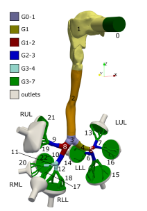 2025/02/10 - Further Cooperation with the Brno University of Technology 2025/02/10 - Further Cooperation with the Brno University of TechnologyWe are happy to announce that we will extend our cooperation with Frantisek Prinz, Frantisek Lizal and many more from the Brno University of Technology. In March we first published a paper on paper on Comprehensive experimental and numerical validation of Lattice Boltzmann fluid flow and particle simulations in a child respiratory tract. Now we aim to study particle transport and deposition within the human respiratory system. This is essential for understanding various physiological and pathological processes as well as for developing effective drug delivery strategies. While considerable research has focused on male airway models, there is a growing recognition of the need to investigate female-specific airway geometries due to significant anatomical and physiological differences between sexes. Learn more |
 2025/02/10 - Welcoming our guest Yongbo Deng 2025/02/10 - Welcoming our guest Yongbo DengWe are honored to welcome Yongbo Deng from Institute of Microstructure Technology (IMT)
Yongbo Deng is visiting us for a presentation on Topology Optimization of Micro and Nano Structures, which introduces a theoretical method for the development of Highly lightweight structures. This technique has numerous applications, metalenses in visible and infrared light, metalens arrays and many more.
We sincerely thank Yongbo Deng for his time and effort and look forward to future collaborations!
|
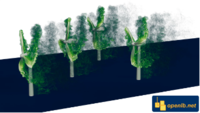 2025/01/20 - Official Start of the SeaDream Project 2025/01/20 - Official Start of the SeaDream Project
The SeaDream project strengthens EU efforts to achieve climate neutrality and to meet green energy and environmental targets.
SeaDream plays a crucial role in ensuring that marine energy is used sustainably and that coastal environments are preserved in line with EU policies.
The development of a high-resolution water-quality data service at sea is at the core of SeaDream’s mission. Data like these are crucial for addressing specific questions regarding maritime renewable energy generation and storage. In cooperation with the University of Luxembourg, the University of Liverpool, and several other partners, the Lattice Boltzmann Research Group (LBRT) at KIT will work on this project for four years.
Video of a Large Eddy Lattice Boltzmann Simulation of a Wind Park is available here: https://www.youtube.com/watch?v=dCAQiXfV50I Learn more |
 2024/12/09 - Welcoming our new research staff member: Christoph Gaul 2024/12/09 - Welcoming our new research staff member: Christoph GaulWe are pleased to announce that Christoph Gaul has joined our team as a new research staff member. His main topic of research will be Modelling ans Simulation of Particulate Flows. More percisely development of models and numerical methods for the simulation of particulate, turbulent and reactive flows for process engineering applications. |
 2024/12/02 - Welcoming our guest Philipp Spelten 2024/12/02 - Welcoming our guest Philipp SpeltenWe are honored to welcome Philipp Spelten from the University of Siegen at the Lattice Boltzmann Research Group (LBRG) at KIT.
During his visit, Philipp worked on aeroacoustics and noise prediction for airfoils with Lattice Boltzmann Simulations in OpenLB.We would like to thank Philipp for his time and effort. We are looking forward to future collaborations. |
 2024/11/21 - New paper “Benchmark Simulation of Laminar Reactive Micromixing Using Lattice Boltzmann Methods” in American Institute of Aeronautics and Astronautics Journal published 2024/11/21 - New paper “Benchmark Simulation of Laminar Reactive Micromixing Using Lattice Boltzmann Methods” in American Institute of Aeronautics and Astronautics Journal publishedWe are excited to announce the publication on “Benchmark Simulation of Laminar Reactive Micromixing Using Lattice Boltzmann Methods” in the American Institute of Aeronautics and Astronautics Journal. There, we reestablish a benchmark for a reactive laminar micromixer using lattice Boltzmann methods (LBM) with special treatment of specie transport in secondary vortices resolved till the smallest Batchelor scale. This research was done with help of the open source CFD software OpenLB.
The article is published in the AIAA Journal under subscription: https://doi.org/10.2514/1.J064234 and is freely available as preprint at https://dx.doi.org/10.13140/RG.2.2.10086.64326 |
 2024/11/21 - New paper “Calculation of Single and Multiple Low Reynolds Number Free Jets with a Lattice-Boltzmann Method” in American Institute of Aeronautics and Astronautics Journal published 2024/11/21 - New paper “Calculation of Single and Multiple Low Reynolds Number Free Jets with a Lattice-Boltzmann Method” in American Institute of Aeronautics and Astronautics Journal publishedWe are excited to announce the publication on “Calculation of Single and Multiple Low Reynolds Number Free Jets with a Lattice-Boltzmann Method” in the American Institute of Aeronautics and Astronautics Journal. In this research, we investigated behavior of a free jet and free jets bundle at distinct Reynolds numbers using lattice Boltzmann method and OpenLB. The article is published in the AIAA Journal under subscription: https://doi.org/10.2514/1.J064280 |
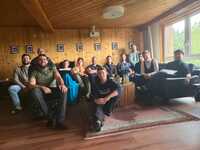 2024/10/23 - First OpenLB Hackathon completed 2024/10/23 - First OpenLB Hackathon completedFrom October 6-11, 2024, the LBRG successfully organized the first OpenLB Hackathon in Feldberg, Germany. For one week, 14 group members focused on core development to further improve OpenLB in terms of boundary condition modeling, GPU support and user friendliness. |
 2024/08/25 - New paper on UQ and LBM published in Journal of Computational Physics 2024/08/25 - New paper on UQ and LBM published in Journal of Computational PhysicsFor the first time, we combined the lattice Boltzmann method (LBM) with the stochastic Galerkin (SG) method. The article is published open access in the Journal of Computational Physics and is freely available at https://doi.org/10.1016/j.jcp.2024.113344 . SG LBM extends LBM into the field of uncertainty quantification. As a proof of concept, we implemented parts of the approach in OpenLB and validated it using classical fluid dynamics benchmark tests with multidimensional uncertainty. In our numerical experiments, we achieved a speedup factor of 5.72 compared to Monte Carlo sampling, which demonstrates the high efficiency of SG LBM. |
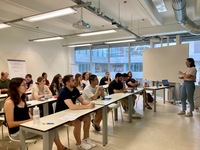 2024/07/18 - Block seminar on computational fluid dynamics 2024/07/18 - Block seminar on computational fluid dynamicsThe lectures in the block seminar on computational fluid dynamics took place this week. Topics included particle distribution in the air after coughing, boiling water in microchannels, wind simulations around individual buildings and in residential neighbourhoods with different tree cover (in Dubai). We studied models with compressibility, with springs and for non-spherical particles. On Monday, 22 July at 1 pm, we will present the topics for next semester's seminar in room 3.069. |
| 2024/07/15 - New Video on our upcoming Fluid Structure Interaction module We have just released a new video on our OpenLB YouTube Channel. This is a first experimental showcase of OpenLB’s upcoming general purpose fluid structure interaction (FSI) capabilities. Visualized are various viewpoints on the vorticity norm of a two-way coupled four-turbine wind park setup with Reynolds number 1.2 Million. The simulation consisting of 1.5 billion cells utilized a single accelerated compute node of 4x NVIDIA H100 GPGPUs.
|
 2024/07/08 - Prof. Dr. Alexander Wagner visited the LBRG 2024/07/08 - Prof. Dr. Alexander Wagner visited the LBRGLast Friday (05.07.2024), the members of the Lattice Boltzmann Research Group (LBRG) received Prof. Dr. Alexander Wagner. His visit was marked by excellent research exchanges on Lattice Gas and Boltzmann Methods. |
 2024/06/17 - Prof. Dr. Eduard Feireisl visited the LBRG 2024/06/17 - Prof. Dr. Eduard Feireisl visited the LBRGOn June 14, 2024, the LBRG had the honor to host Prof. Dr. Eduard Feireisl (Czech Academy of Sciences, https://www.math.cas.cz/index.php/members/researcher/37) for a short research visit.
He gave a talk on dynamic homogenization of incompressible fluid flows (see https://arxiv.org/html/2404.06782v1) and worked together with Dr. Stephan Simonis, Adrian Kummerländer, Julius Jeßberger and PD Dr. Mathias J. Krause towards the numerical analysis of homogenized lattice Boltzmann methods (see https://arxiv.org/abs/2310.14746) for fluid structure interaction problems. |
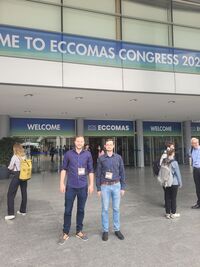 2024/06/11 - LBRG at ECCOMAS 2024 2024/06/11 - LBRG at ECCOMAS 2024Last week LBRG attended the ECCOMAS Congress in Lisbon from 3rd to 7th June! Several members of LBRG presented their work.
▶ The techniques developed by the LBRG team are currently used for large eddy simulations of fluid-structure interaction with parallel solution of multiple coupled partial differential equations, and will soon contribute to providing aerodynamics-optimized geometries and reduced noise for wing elements within FALCON ✈
For more information auf FALCON please visit: https://www.lbrg.kit.edu/page/falcon/ |
 2024/03/08 - LBM Spring School in Heidelberg successfully finished 2024/03/08 - LBM Spring School in Heidelberg successfully finishedThe executive committee is happy to announce the closing of the 7th LBM Spring School with OpenLB Software Lab. We hosted 57 participants from 13 countries this year. Congratulations to Jakob Scheel from the US for winning our poster award. We are already busy with organizing the next spring schools. The 8th spring school is planned to take place in Marseille, France from May 19-23, 2025. We would like to thank all participants for attending the 7th spring school in Heidelberg and acknowledge the support from our funders.
On behalf of the spring school executive committee (Kerstin Dick, Shota Ito, Mathias J. Krause and Stephan Simonis) |
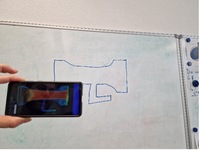 2024/02/23 - New Android App “paint2sim” Released 2024/02/23 - New Android App “paint2sim” ReleasedPaint2sim is a mobile application using a Lattice Boltzmann Method realized by the open-source simulation framework OpenLB. This innovative app allows users to scan hand-drawn domains and visualize 2D fluid flow simulations just-in-time on their mobile devices. Whether you're a student, researcher, or engineer, explore fluid dynamics with an intuitive interface with your fingertips. The app is freely available for download.
For in-depth technical insights, refer to our latest paper, "Just-in-Time Fluid Flow Simulation on Mobile Devices Using OpenVisFlow and OpenLB"
Dennis Teutscher and his team developed the app paint2sim as part of the "teaching4future" project, with funding from the Lattice Boltzmann Research Group at KIT and the Ministry of Science, Research, and Arts of Baden-Württemberg, Germany. |
 2024/02/20 - LBRG joins kick-off meeting for EU-funded project FALCON 2024/02/20 - LBRG joins kick-off meeting for EU-funded project FALCONThe EU-funded project FALCON (Foreseeing the next generation of Aircraft: hybrid approach using Lattice-boltzmann, experiments and modelling to optimize fluid/struCture interactiONs) has started in January 2024 for a duration of 4 years and is coordinated by the Université d'Aix-Marseille, France. The project has received funding from the European Union’s Horizon Europe research and innovation programme under grant agreement No 101138305. The FALCON partners (from 6 countries: Belgium, Czech Republic, France, Germany, Spain, UK) each bring unique expertise in experimental and numerical approaches in fluid and solid mechanics:
FALCON's goal is to enhance the design capabilities of the European industrial aircraft sector by focusing on fluid–structure interaction (FSI) phenomena to improve the aerodynamic performance of aircraft (unsteady loads). FALCON assembles a unique interdisciplinary environment of fifteen public and private institutions and their affiliated entities (from renowned research institutions to SMEs and aircraft high-tier suppliers and integrators) to cover all the required scientific and know-how expertise. Building upon three industrial test cases and tight links with key European partnerships such as Clean Aviation, FALCON delineates a high-impact/low-risk proposal that will significantly contribute to the digital transformation of the European aircraft supply chain.
The Lattice Boltzmann Research Group (LBRG) participated in the official kick-off meeting for FALCON (see LinkedIn). Learn more |
 2024/02/12 - Successful Doctoral Colloquium of Nicolas Hafen 2024/02/12 - Successful Doctoral Colloquium of Nicolas HafenNicolas Hafen successfully passed his doctoral thesis examination.
Congratulations to Nicolas and best wishes from the LBRG Team! |
 2023/09/29 - OpenLB paper is ranked 5th on the list of top cited articles in Computers & Mathematics with Applications 2023/09/29 - OpenLB paper is ranked 5th on the list of top cited articles in Computers & Mathematics with ApplicationsWe are proud to share that our paper "OpenLB—Open source lattice Boltzmann code" (https://doi.org/10.1016/j.camwa.2020.04.033) is ranked 5th on the list of "Top cited articles published in the past 3 years" in the journal Computers & Mathematics with Applications (IF 2.9, SJR Q1 in "Modeling and Simulation" and in "Computational Theory and Mathematics").
By the way, out of the first five articles in this list, two are on LBM-based software!
In addition, within the list of "The most downloaded articles in the last 90 days" our paper is ranking 6th. Three out of the first six papers in this list use #LBM.
Thank you to the community for citing us, to the team, the co-authors, the co-developers, and especially to Mathias J. Krause for leading the development of #OpenLB in the past years.
You can download the latest release at https://www.openlb.net.
Sources
Elsevier: |
 2023/06/28 - Successful Doctoral Colloquium of Stephan Simonis 2023/06/28 - Successful Doctoral Colloquium of Stephan SimonisStephan Simonis successfully passed his doctoral thesis examination entitled: "Lattice Boltzmann Methods for Partial Differential Equations".
Congratulations to the candidate and the reporters PD Dr. Mathias J. Krause, Prof. Dr. Siddhartha Mishra and Assoc. Prof. Dr. Tim Reis! |
 2023/06/12 - LBM Spring School in Greenwich successfully finished 2023/06/12 - LBM Spring School in Greenwich successfully finishedThe executive committee is happy to announce the closing of the 6th LBM Spring School with OpenLB Software Lab. We hosted 50 participants from 15 countries this year. Congratulations to Martijn Gobes from the Netherlands for winning our poster award.
We are already busy planing next years spring school. The 7th spring school is planned to take place in Heidelberg/Karlsruhe in Germany from March 4th to 8th 2024. n.
Thank you all for attending the 6th spring school in Greenwich!
On behalf of the spring school executive committee. |
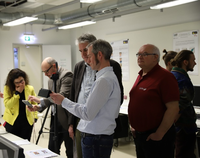 2023/01/24 - Teaching4Future Symposium 2023/01/24 - Teaching4Future Symposiuming4Future Symposium On Tuesday, January 24th, 2023, the research collaboration between the Lattice Boltzmann Research Group at KIT and the CeMOS Research Center (https://www.cemos.hs-mannheim.de) at Hochschule Mannheim presented their results from the "Teaching4Future" research project funded by the Ministry of Science and Art. The aim was to make mathematical and process engineering concepts more understandable for students using XR technologies. Innovative apps such as OpenLBar (LBRG/KIT) and Paint2Sim (LBRG/KIT), as well as ARTIC (CeMOS), were introduced, enabling interaction, simulation, and visualization of 3D data through AR. The apps OpenLBar and soon Paint2Sim can be downloaded for free at https://www.openlb.net.
The numerous visitors had the opportunity to extensively test the apps and provide feedback during a relaxed get-together, which also included delicious Weißwürste and Brezeln. |
 2022/10/25 - Cover Image of Energies, Volume 15, Issue 20 2022/10/25 - Cover Image of Energies, Volume 15, Issue 20Together with co-authors, members of the LBRG published their work on "Comprehensive Computational Model for Coupled Fluid Flow, Mass Transfer, and Light Supply in Tubular Photobioreactors Equipped with Glass Sponges" in Energies 2022, 15(20), 7671, doi: 10.3390/en15207671. The article was selected as cover story for the current issue. All simulations in the article have been conducted with OpenLB. |
 2022/07/06 - OpenLBrezel 2022/07/06 - OpenLBrezelTo celebrate the end of our time in home office due to Corona, the LBRG had a get-to-gether on June, the 6th. We enjoyed to meet again in person and got to know each other better while having a giant pretzel and a cup of coffee.
The pretzel is now honorary member known as OpenLBrezel. |
 2022/06/10 - LBM Spring School with OpenLB Software Lab in Kraków successfully finished 2022/06/10 - LBM Spring School with OpenLB Software Lab in Kraków successfully finishedThe executive committee announces the closing of the fifth LBM Spring School with OpenLB Software Lab. We were happy to host 51 participants from 8 countries, including 4 invited speakers in Kraków, Poland. This year’s poster award goes to Pavel Eichler (Czech Technical University in Prague).
Next year, the 6th spring school is planned to take place at the University of Greenwich in England/UK from 2023 June 5th to 9th.
On behalf of the spring school executive committee, Nicolas Hafen, Mathias J. Krause, Paweł Madejski, Tomasz Kuś, Navaneethan Subramanian, Maciej Bujalski, Karolina Chmiel. |
 2022/05/14 - LBRG at the KIT campus day 2022/05/14 - LBRG at the KIT campus dayThe LBRG presents its high performance fluid flow simulations using a desktop computer at the KIT campus day. |
| 2022/04/22 - New paper published in “Fluids” Members of the LBRG published an article about the numerical optimization of pulsation in a micromixer with automatic differentiation. It is available open access at doi.org/10.3390/fluids7050144. |
| 2022/04/12 - New paper published in “Mitteilungen der Deutschen Mathematiker-Vereinigung“ Members of the LBRG published an article about research-oriented teaching under pandemic restrictions (in German: "Forschungsnahe Lehre unter Pandemiebedingungen") in the magazine of the long-standing German Mathematical Society DMV ("Deutsche Mathematiker-Vereinigung"). |
| 2022/04/01- Winner of the “Computation 2020 Best Paper Awards” The paper with the title "Evaluation of a Near-Wall-Modeled Large Eddy Lattice Boltzmann Method for the Analysis of Complex Flows Relevant to IC Engines" is one of the two top-voted papers that have won the Computation 2020 Best Paper Awards. |
 2022/03/11- FILTECH 2022 2022/03/11- FILTECH 2022In March we had the opportunity to present some of our most recent projects at the annual FILTECH fair in Cologne. We discussed with visitors different topics around the lattice Boltzmann method as well as our open source software Open LB and its application. We further presented simulations results with our newly developed AR-App OpenLBar, which helps users to better understand and experience fluid flows through user interactions such as geometry overlay. |
| 2022/01/20 - Latest publication in Journal of Computational Physics For the first time, we used lattice Boltzmann methods (LBM) for temporal large eddy simulation (TLES).
|
 2022/01/18 - LBRG member Dr. Mathias J. Krause successfully completes his habilitation 2022/01/18 - LBRG member Dr. Mathias J. Krause successfully completes his habilitationThe head of LBRG Dr. Mathias J. Krause completed the habilitation examination on January 18, 2022. The thesis is titled Fluid Flow Control and Simulation in Process Engineering Homogenised Lattice Boltzmann Methods. He is now “Privatdozent (PD)” for the subject scientific computing and numerical mathematics for process engineering. |
 2021/12/13 - SBCB/UFRGS and LBRG meet in Cambara do Sul, Brazil 2021/12/13 - SBCB/UFRGS and LBRG meet in Cambara do Sul, BrazilBetween December 2 and 9, 2021 members of LBRG/KIT and SBCB/UFRGS met for a workshop in Cambara do Sol, Brazil to conclude their fruitful CAPES/ProBral exchange on Mesoscopic Molecular Dynamics Simulations and discuss future possibilites of collaboration. The participants were able to look back on multiple work and study missions between Brazil and Germany in 2019 and 2021, yielding numerous joint publications. Further highlights included the PhD respectively post doc exchange years of Bruno Iochins Grisci, Pedro Henrique Narloch and Dr. Manuel Riveros Escalona at KIT as well as a two-day workshop on Lattice Boltzmann Methods with OpenLB Software Lab at UFRGS in 2019. A full overview is available on the dedicated project website.
The workshop was complemented by excursions to the Itaimbezinho and Fortaleza canyons surrounding Cambara do Sul. |
| 2021/11/24 - LBRG members give talks at the research group 'Schémas de Boltzmann sur réseau' (Institut Henri Poincaré) Mathias J. Krause and Stephan Simonis were invited to give talks at the renowned research group "Schémas de Boltzmann sur réseau" led by François Dubois François Dubois at Institut Henri Poincaré, France. The presented topics include "OpenLB - Fluid Flow Simulation and Control on High Performance Computers" and "Temporal large eddy simulation with lattice Boltzmann methods". |
| 2021/11/19 - Team member Johanna Mödl receives scholarship from the Graduate Funding from the German States For her dissertation project on the subject of simulation of transport processes in lithium ion batteries by use of Lattice Boltzmann methods Johanna Mödl received a scholarship from the Graduate Funding from the German States (Landesgraduiertenförderung), which is awarded to highly qualified young scientists.
|
| 2021/10/11 - (Covid) Virus Risk Simulation Are ventilation systems effective against aerosol emission from breathing? Find out |
| 2021/08/30 - LBRG member Robin Trunk successfully completes his Ph.D. After completing the doctoral examination on July 22, 2021, today, the dissertation titled "Numerical Investigation of the Settling Behavior of Non-Spherical Particles - Application of Homogenized Lattice Boltzmann Methods" has also been published. |
| 2021/05/18 - LBRG member Marie-Luise Maier successfully completes her Ph.D. After completing the doctoral examination on April 30, 2021, today, the dissertation titled "Coupled lattice Boltzmann and discrete element method for reactive particle fluid flows with applications in process engineering" has also been published. |
| 2021/04/22- The LBRG is awarded with the KIT faculty teaching award 2021 for the course “Projektorientiertes Softwarepraktikum“ The KIT faculty teaching award 2021 honors several members of the Lattice Boltzmann Research Group (LBRG) for high quality teaching within the course “Projektorientiertes Softwarepraktikum”, namely Stephan Simonis, Marc Haussmann, Maximilian Gaedtke, Dr. Mathias J. Krause and PD Dr. Gudrun Thäter. Since 2007 the KIT Executive Board grants the faculty teaching award to recognize excellence in teaching throughout the eleven faculties at KIT. The prize is endowed with 10,000 Euros. The prize money is used to enhance the teaching and study experience at KIT. More information and a video portrait of all nominees can be found here. |
| 2020/12/19 - OpenLB Overview Paper Published We are very happy to announce that we have just published our new OpenLB Overview Paper. You can find it on pages 258-288 in volume 81 of Computers & Mathematics with Applications. This paper summarizes the findings of the research that was conducted with OpenLB and gives a brief introduction to the underlying concepts as well as the design of the parallel data structure. It is a great read for newcomers as well as seasoned OpenLB users. |
| 2020/12/02 - LBRG member Maximilian Gaedtke successfully completes his Ph.D. After completing the doctoral examination on November 05, 2020, today, the dissertation titled "Thermal Lattice Boltzmann Methods for the Simulation of Turbulent Flows with Conjugate Heat Transfer – Application to Refrigerated Vehicles" has also been published. |
| 2020/10/13 - LBRG member Marc Haussmann successfully completes his Ph.D. After completing the doctoral examination on September 30, 2020, today, the dissertation titled "Lattice Boltzmann Methods for Turbulent Flows: Application to Coriolis Mass Flowmeter" has also been published. |
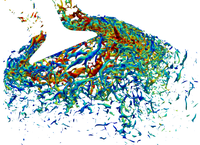 2020/07/31- OpenLB paves the way to „overnight“ near-wall-modeled large eddy simulations 2020/07/31- OpenLB paves the way to „overnight“ near-wall-modeled large eddy simulationsIn a collaboration of the Lattice Boltzmann Research Group (LBRG) at the Karlsruhe Institute of Technology (KIT) and the Institute of Reactive Flows and Diagnostics of the department of Mechanical Engineering (RSM) at the Technical University of Darmstadt, the capabilities of two open source near-wall-modeled large eddy simulation (NWM-LES) approaches were investigated to predict complex turbulent flows relevant to internal combustion (IC) engines.
Therefore, OpenLB was compared to the commonly applied open source tool OpenFOAM, using a highly precise particle image velocimetry measurement as reference. The comparison covers prediction accuracy, computational costs and ease of use.
The performance results show that the OpenLB approach is on average 32 times faster than the OpenFOAM implementation for the tested configurations. The faster calculation speed for NWM-LES using the lattice Boltzmann method implementation in OpenLB is advantageous to address industrial applications and to enable "overnight" calculations that previously took weeks.
Checkout our recent publication for more details. |
| 2020/07/06 - How face masks and ventilation of enclosed spaces can protect against infectious aerosols KIT researchers are investigating the formation, detection, distribution and separation of gas-borne particles and droplets as well as the effectiveness of filters. Using simulations, they analyze aerosols, their distribution and deposition in rooms, filters and the human respiratory tract. Read more |
| 2020/05/12 - LBRG student member Marc Siodlaczek wins award for the best simulative bachelor's thesis 2019 The bachelor's thesis with the title "Evaluation of the accuracy of the thermal Lattice Boltzmann method in the transition to turbulent flow", which was supervised by the LBRG, was awarded with the prize for the best simulative Bachelor's thesis by the VM-Verein. |
| 2020/05/01 - New project „Potential for damage to fruits“ funded by BMWi via AiF/FEI starts The research centers TU Berlin (Institute for Food Technology and Food Chemistry, Department of Food Biotechnology and Food Process Engineering) and KIT (Lattice Boltzmann Research Group) cooperate to determine the potential damage to fruits in fruit mixtures during processing. Learn more |
| 2020/04/02 - Project “Virtual Collaboration Laboratories“ funded by the state Within the project, the team headed by Dr. Mathias J. Krause consisting of mathematicians and engineers from the Mannheim University of Applied Sciences (Prof. Dr. M. Rädle) and the Karlsruhe Institute of Technology (Prof. Dr. W. Dörfler, Prof. Dr.-Ing. H. Nirschl) is making existing VR/AR hardware technologies available for teaching to enable a modern education of students in the natural and engineering sciences. |
 2020/03/13 - Spring School 2020 successfully finished 2020/03/13 - Spring School 2020 successfully finishedThe executive committee announces the closing of the third LBM Spring School with OpenLB Software Lab. We were happy to host 60 participants from nine countries, including five invited speakers in Berlin, Germany. This year’s poster award goes to Dominik Wilde et al. from the University of Siegen, Germany. On behalf of the spring school executive committee, Nicolas Hafen, Mathias J. Krause, Harald Kruggel-Emden, Christopher McHardy, Cornelia Rauh, Holger Stark, Robin Trunk |
 2019/12/11 - Workshop in Porto Alegre/ Brazil Successfully Finished 2019/12/11 - Workshop in Porto Alegre/ Brazil Successfully FinishedLBM Workshop with OpenLB Software Lab in Brazil Successfully Finished. The executive committee announces the closing of the LBM Workshop with OpenLB Software Lab at UFRGS in Porto Alegre, Brazil. We were happy to host 35 participants including five speakers from LBRG (KIT, Karlsruhe, Germany). The workshop took place in the framework of the Brazilian-German PROBRAL project “Mesoscopic Molecular Dynamics Simulations: Development of Models andComputational Strategies for Complex Structural Bioinformatics Problems” supported by CAPES and DAAD. On behalf of the workshop executive committee, Marcio Dorn, Mathias J. Krause,Stephan Simonis. |
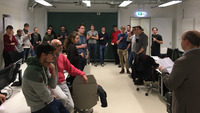 2019/11/20 - Pre-Christmas get-together of the LBRG 2019/11/20 - Pre-Christmas get-together of the LBRGChristmas meeting: The pre-Christmas celebration was attended by graduate workers, Hiwis and PhDs and former employees. |
 2019/09/17 - The international workshop “Data-driven Modeling and Optimization in Fluid Mechanics“ successfully finished. 2019/09/17 - The international workshop “Data-driven Modeling and Optimization in Fluid Mechanics“ successfully finished.It focused on the application of artificial intelligence, machine learning, deep learning, evolutional algorithms and adjoint-based optimization to fluid dynamics-related problems with special focus on turbulent flows and flow control. The executive committee were happy to host 95 participants from 11 countries and 3 continents, including 11 speakers in Karlsruhe, Germany. The workshop was organized under the patronage of the “MathSEE“ Centre of the Karlsruhe Institute of Technology and sponsored by - KIT-center MathSEE - DFG Priority Program 1881 - DFG Collaborative Research Center/Transregio 150 The organization of workshop was supported by Institute of Fluid Mechanics and Lattice Boltzmann Research Group at KIT. |
 2019/04/11 - OpenLB at PowTech 2019, Nürnberg Germany (April 9th to 11th) 2019/04/11 - OpenLB at PowTech 2019, Nürnberg Germany (April 9th to 11th)Our Virtual Reality (VR) approach for process engineering applications shows OpenLB’s latest simulation results. In the VR presentation, an observer can explore the data in a room filling virtual reality with VR glasses and controller.
|
| 2017/06/07 - OpenLB Community YouTube Channel Update A new video shows the results of a famous benchmark problem in CFD. The lid driven cavity problem illustrates a flow in a cuboid. The top wall moves from left to right with a constant velocity, while the other walls are fixed. The fundamental feature of this often studied fluid flow problem is the formation of a large primary vortex in the center and two smaller vortices near the two lower edges. Different techniques are applied to visualize the fluid flow including the vortices with the cavity. The source code of this simulations can be found in the examples section of the latest release of OpenLB. You will find more information in our show case section.
|
 Open Position: Research Assistant (Doctoral Student) in Optimization and Scientific Computing Using Lattice Boltzmann Methods Open Position: Research Assistant (Doctoral Student) in Optimization and Scientific Computing Using Lattice Boltzmann MethodsAt the Institute of Applied and Numerical Mathematics (IANM) at the Karlsruhe Institute of Technology (KIT) we are looking for a
Research Assistant (f/m/d)
for our team Lattice Boltzmann Research Group (LBRG, www.lbrg.kit.edu). The position is part of an exciting research project focused on advanced numerical modelling and simulation with focus on sensitivity analysis and optimization for fluid dynamics, solid mechanics, and fluid-structure interaction (FSI) using lattice Boltzmann methods (LBM). After familiarisation, remuneration is paid according to TV-L, E 13. This role provides the opportunity to pursue a doctorate (PhD degree). Learn more |
 25.08.2025- New Paper published on the consistency of pseudo-potential lattice Boltzmann methods 25.08.2025- New Paper published on the consistency of pseudo-potential lattice Boltzmann methodsWe present a rigorous analysis of the pseudo-potential lattice Boltzmann method (P-LBM), showing its convergence to a PDE under diffusive scaling. By linking model parameters directly to physical properties, we enable simulations with inputs in SI units—no empirical tuning required. The method is implemented in OpenLB and validated with R134a benchmark tests. Further information can be found here |
 Showcase: Magnetic Separation Showcase: Magnetic SeparationWe are pleased to present a simulation of the deposition of magnetic particles using OpenLB, an open-source lattice Boltzmann method (LBM) software. High-gradient magnetic fishing (HGMF) is a downstream processing technique for biomolecules such as proteins. In the initial step, magnetic particles are coated with a layer containing specific ligands that bind to a designated target molecule. These particles are then introduced into a medium that contains the target molecule, allowing adsorption of the molecules onto the ligands. Subsequently, the particles are separated using a magnetized wire and transferred to another medium. Finally, an elution step is performed to recover the purified molecules. The simulation illustrates the deposition of magnetic particles on a magnetized single wire and models the magnetic separation step of the HGMF process. Dipole forces acting on the particles are taken into account through a coupled discrete element method–lattice Boltzmann method (DEM-LBM) approach, implemented within the open-source software OpenLB. |
